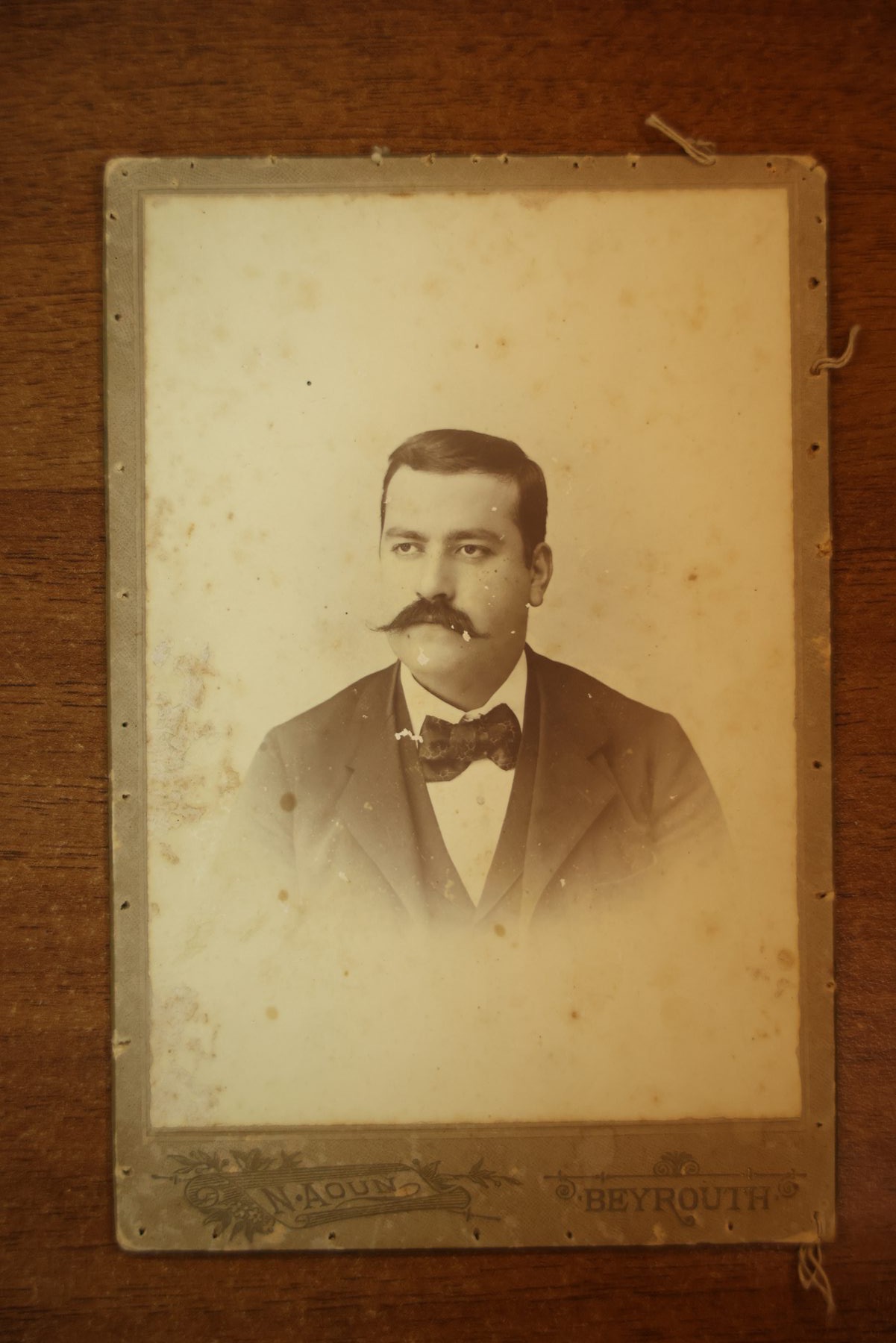
Youssef Sader was born in Beirut in 1870, the eldest son of Ibrahim Sader, who had established Lebanon's first commercial bookstore in 1863. Educated at the Jesuit University and the Patriarchal School in Zokak el-Blat, he entered legal practice and served as a judge at the Ottoman Court of Beirut for four years, and as a member of the Administrative Council of Beirut for a decade.
In 1890, Ibrahim Sader expanded the family enterprise by establishing the Scientific Press (al-Matba'a al-'Ilmiyya), broadening its scope to encompass publishing in law, culture and literature. Youssef took charge of the press and specialised early in legal publishing, recognising that a citizen who cannot access the law cannot truly be governed by it.
"Whereas it is the duty of every citizen to know the laws of their country, we took it upon ourselves to publish and make these laws accessible to all." — Youssef Sader
In 1921, he founded Al Majallat al-Qada'iyyat (La Revue Juridique), the first legal periodical in the Arab world. Through its pages, he published official legislation, judicial rulings and legal scholarship from the courts of Greater Lebanon and Syria. He organised each issue with detailed alphabetical indexes, establishing for the first time a systematic record of the law for the Arabic-speaking world.
In July 1926, only two months after its adoption, the journal published the full text of the Lebanese Constitution, the charter that transformed the State of Greater Lebanon into the Lebanese Republic, the first republic in the Middle East. He went on to compile the first comprehensive collection of Lebanese laws, a nine-volume work of 3,800 pages that was acquired by the United Nations Library in New York.
Beyond legal texts, Youssef was a man of letters. He published literary works by the renowned Amine Rihani, his brother-in-law, and in 1908 produced the SADER Agenda, among the earliest agenda-diaries in the Levant. Between 1941 and 1946, he undertook the transfer of legal texts from Ottoman Turkish into French and Arabic, consolidating the post-Mandate legal corpus for practitioners across the region.
Youssef Sader held a resolute belief: that the law is the property of the people, and that its power rests on their ability to know it, to read it, to invoke it. He saw legal publishing as an act of civic service, placing knowledge in the hands of citizens so they might govern their own affairs with clarity and confidence. In recognition of this contribution, the Lebanese Republic awarded him the Medal of Knowledge and the Golden Medal of Merit in 1951; the Syrian Republic conferred upon him the Medal of Merit in the same year. He died in Beirut in 1953.
Today, the sixth generation of the SADER family carries forward his conviction. Under the leadership of Rany Sader since 1996, the enterprise has expanded from Beirut to the UAE, Jordan, Saudi Arabia, Kuwait and Cyprus, transitioning from books to databases to artificial intelligence, with the mission unchanged.