for Legal Culture
Preserving legal heritage and advancing legal culture in the Arab world and beyond.
The Foundation
The Youssef Sader Foundation for Legal Culture was established in October 2018 to honour the legacy of Youssef Sader. The SADER family carries that flame with over 160 years of service to the rule of law. We carry forward a founding belief: that the law belongs to the people it governs, and that access to it is both a right and a civic duty.
Our mission is to preserve this irreplaceable heritage, advance legal culture through innovation, and build bridges across generations and across borders, preparing the future with the wisdom of the past.
The Visionary
Legal Visionary & Publisher · 1870–1953
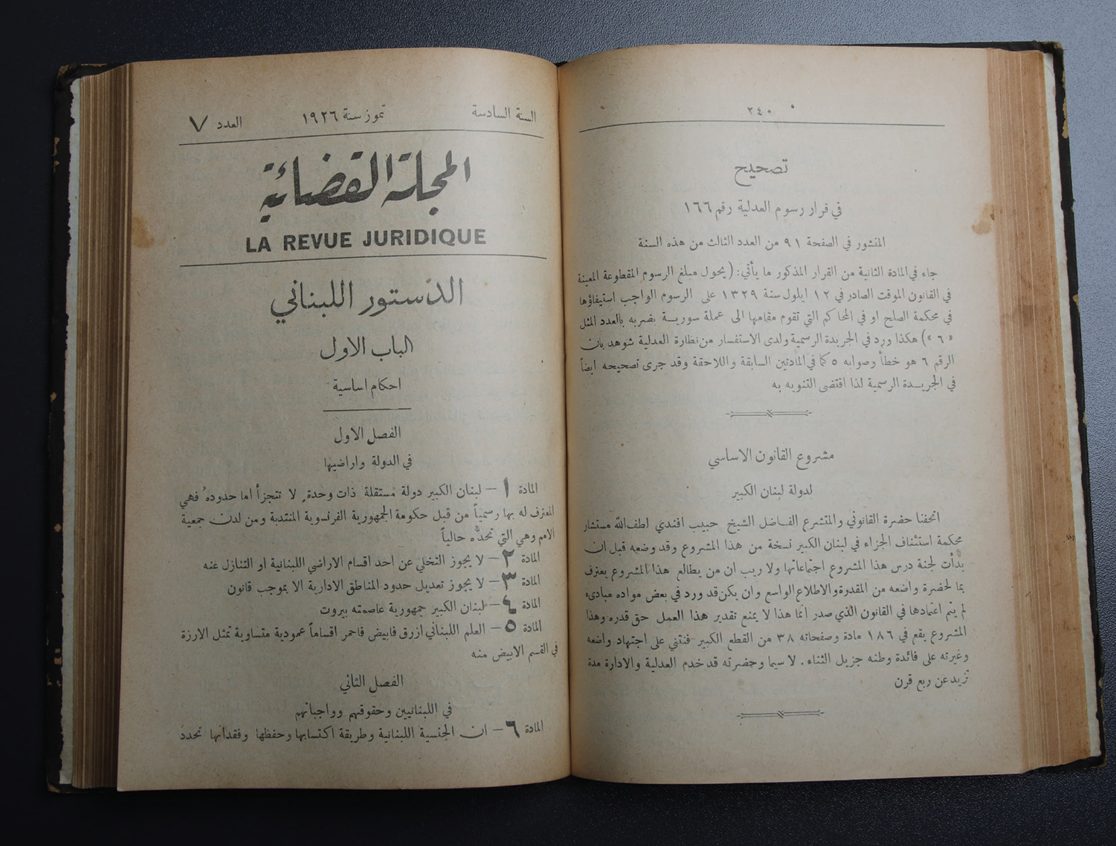
Youssef Sader (1870–1953) was a judge at the Ottoman Court of Beirut and a pioneering legal publisher. In 1921, he founded the first legal periodical in the Arab world. In 1926, he became the first to publish the Lebanese Constitution, the charter that established the first republic in the Middle East. He held a resolute belief that access to the law is the duty of every citizen, and the foundation of a just society.

Latest
Youth Summer Training Programme with the Arab Center for Legal and Judicial Research
The Dean of the USEK Faculty of Law visits Sader
Professor Fayez Hage Chahine entrusts his scholarship to Sader
Masterclass on Legal Leadership in the Age of Artificial Intelligence
Dr Antoine Sfeir visits the Sader Archives
Our Partners
Official Gazette Archive
Making the law accessible to all
In 1921, Youssef Sader published the first legal periodical in the Arab world, carrying the legislation and judicial rulings of Lebanon and Syria to practitioners and citizens who had never before held such knowledge in their hands. The journal established a principle that has guided the SADER family across six generations: that the law must be accessible to those it governs.
In this same spirit, the Foundation presents the full Official Gazette of the Lebanese Republic, freely available to all. It is every citizen's right to know the laws of their country.